- New
|
COOKIES SETTINGS |
Accept all cookies Personalise |
| Accept selected cookies |


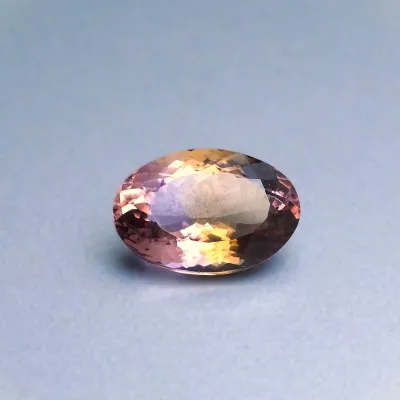
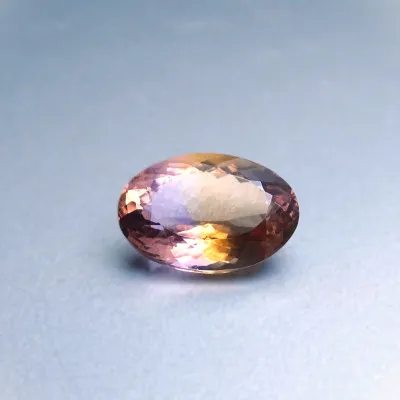
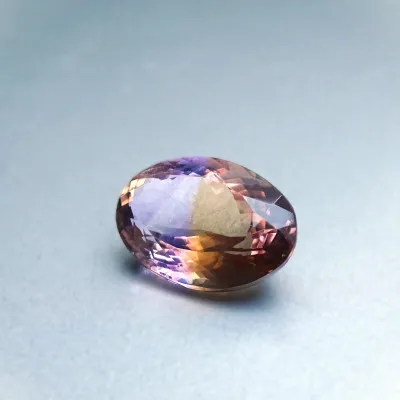
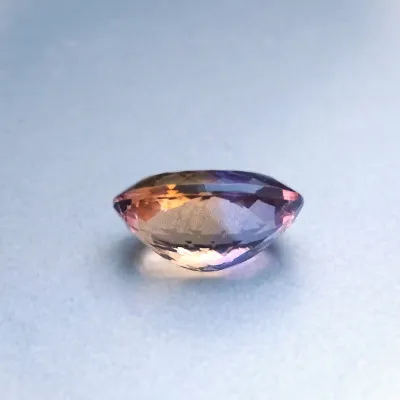
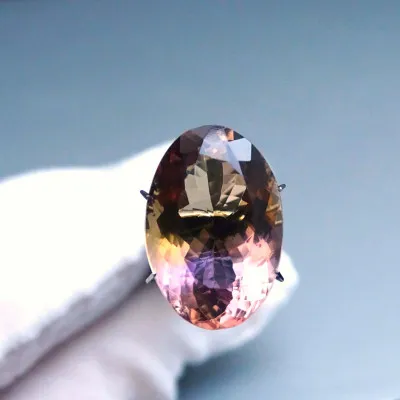
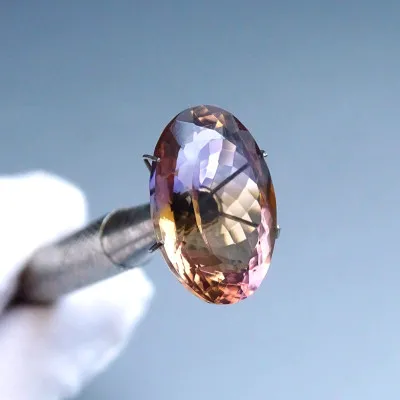
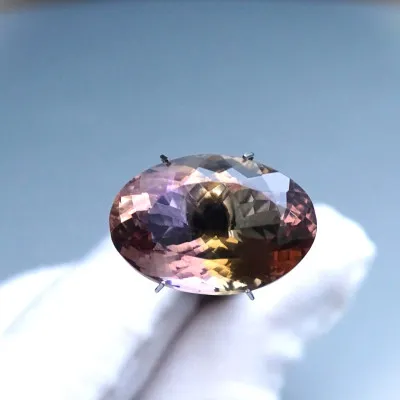
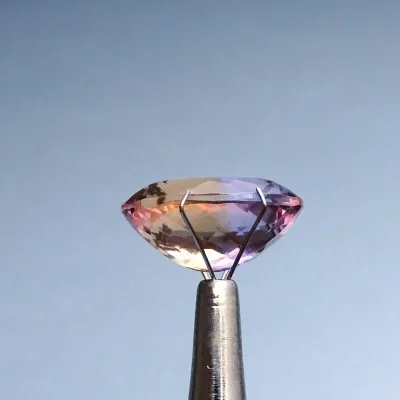
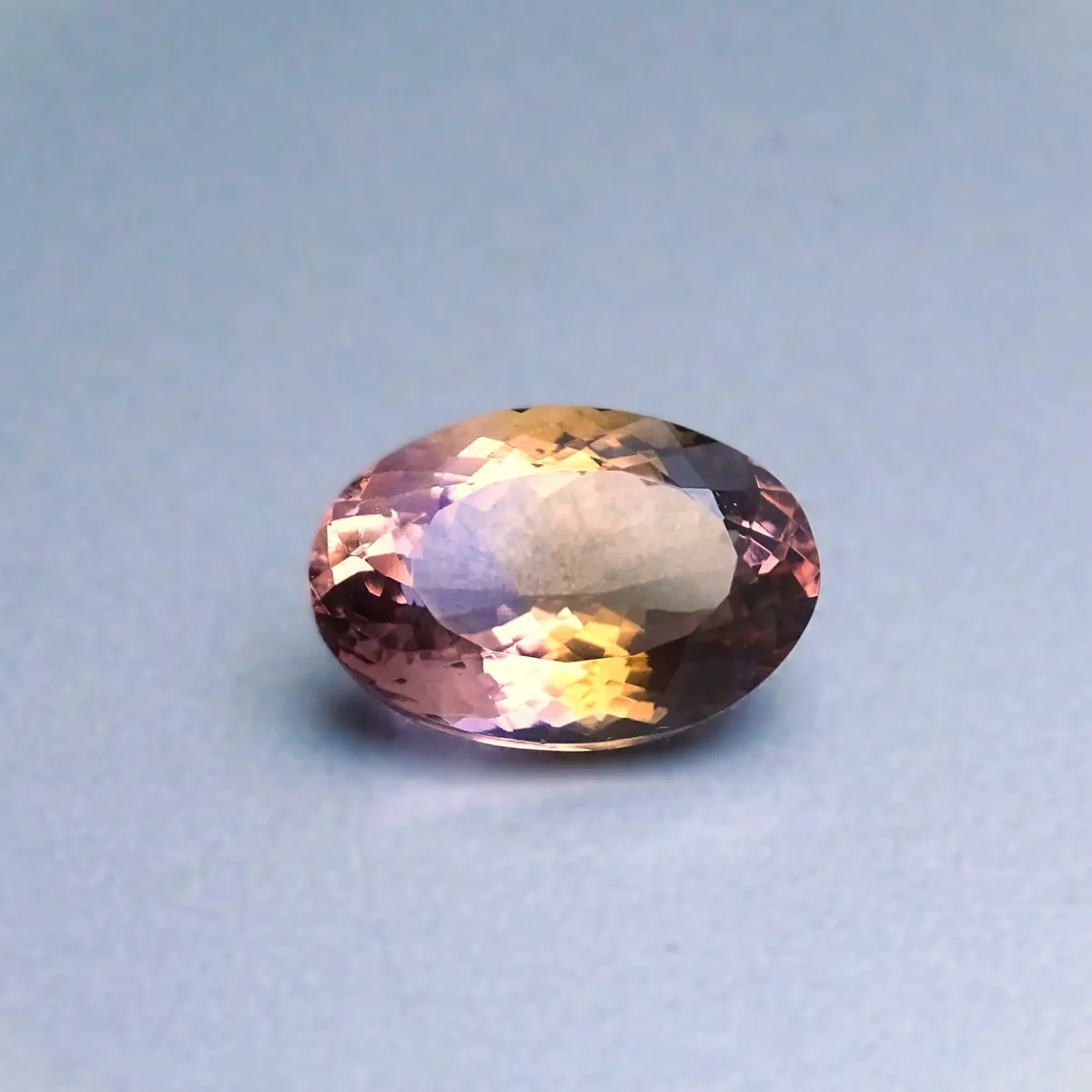
Ametrine cut top quality, great price. Suitable for making jewelry. Discover a unique magical stone that combines the beauty of two minerals - amethyst and citrine. This rare cut ametrine comes from the famous Bolivian locality of Anahí, which is recognized worldwide for the highest quality ametrines.
Weight: 15.89 ct
Dimensions: 19.9 x 13.6 x 9.9 mm
Color: purple - yellow
Country of origin: Bolivia, locality: Anahí Mine
You always buy the mineral shown in the photo!
Ametrine is among the most remarkable natural gemstones belonging to the quartz family. Its extraordinary beauty lies in the rare combination of two distinctive colours – the violet colour of Amethyst and the golden-yellow to honey-coloured tones of Citrine, which naturally occur together within a single crystal.
This fascinating bicoloured gemstone is an exceptional example of natural mineralogical harmony. Within a single transparent stone, cool violet shades meet warm golden light, creating an impressive contrast that becomes even more pronounced when illuminated.
Ametrine is also known by the trade name Bolivianita, or Bolivian Ametrine. Bolivia is the world's most important source of natural gem-quality Ametrine.
Ametrine looks particularly beautiful when faceted, as the individual facets reflect light and emphasise the natural distribution of colours within the gemstone.
Faceted Ametrine from Bolivia is therefore exceptionally attractive not only to lovers of natural gemstones but also to collectors, gemologists and jewellers seeking original material with an unmistakable character.
The most remarkable feature of Ametrine is the natural combination of violet and yellow colour zones within a single quartz crystal. This unusual combination creates a unique appearance that distinguishes Ametrine from most other gemstones.
The violet areas correspond to Amethyst coloration and may range from delicate lavender to more intense purplish-violet tones.
The yellow to golden areas resemble Citrine and create a beautiful contrast with the cooler violet colour.
When a faceted gemstone is appropriately oriented, the two colours may appear as separate sections of the stone. Under different lighting angles, their reflections can visually overlap, creating additional interesting colour effects.
The offered faceted Ametrine gemstones from Bolivia display a characteristic combination of delicate violet, lavender, golden and honey-yellow shades.
The product photographs clearly reveal the transparent structure of the gemstones and their pronounced colour zoning. Individual facets capture incoming light and create elegant reflections that emphasise Ametrine's natural colour diversity.
Thanks to its unique coloration, Ametrine is particularly suitable for various types of faceted cuts. An experienced gemstone cutter can orient the stone to emphasise the contrast between its Amethyst and Citrine sections or create an attractive effect through their optical blending.
The oval-cut Ametrine captivates with its harmonious elongated shape, delicate violet shades and warm golden-yellow reflections.
The oval faceted cut beautifully highlights the gemstone's natural colour zoning and gives it an elegant, balanced appearance.
This shape is especially popular for creating rings, pendants and bespoke jewellery, as it visually enhances the gemstone's surface area while producing an impressive play of light reflections.
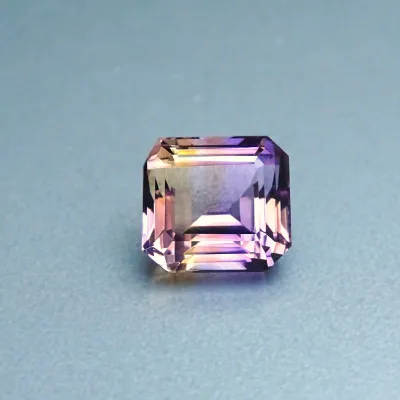
The second faceted Ametrine features a geometric step cut with cut corners, reminiscent of the classic emerald cut.
Its regular step-like facets create elegant transitions of light and emphasise the gemstone's clean geometric character.
This type of cut is especially interesting in Ametrine because it can beautifully highlight the contrast between violet and golden colour zones.
The result is an exceptionally elegant gemstone with impressive visual depth, suitable for both luxurious jewellery and collections of natural faceted gemstones.
Ametrine is a natural bicoloured variety of quartz in which Amethyst-coloured and Citrine-coloured regions occur within a single crystal.
Its chemical formula is SiO₂ – silicon dioxide. From a mineralogical perspective, it is therefore not a combination of two different mineral species but a single quartz crystal displaying distinct colour zones.
Ametrine crystallises in the trigonal crystal system and has the same fundamental physical properties as other crystalline varieties of quartz.
Its hardness is 7 on the Mohs scale, making it suitable for producing faceted gemstones and jewellery.
Ametrine may be transparent to translucent, while high-quality gem material often displays excellent transparency and a pronounced vitreous lustre.
From a mineralogical perspective, Ametrine provides a fascinating example of how small differences in formation conditions and the arrangement of colour centres can produce different colours within separate regions of the same crystal.
The formation of violet and yellow colours is primarily associated with trace amounts of iron, its incorporation into the quartz structure and different conditions influencing the formation of colour centres.
The violet Amethyst coloration is associated with iron and natural processes that affect the electronic state of colour centres within the crystal lattice.
Yellow to orange coloration develops under different chemical and thermal conditions. Individual crystal sectors may therefore exhibit different colours, even though the entire gemstone consists of the same mineral – quartz.
The growth geometry of the crystal also plays an important role. Different growth sectors may possess distinct properties, contributing to the characteristic spatial distribution of colours.
Natural Ametrine is therefore not simply a mixture of Amethyst and Citrine. It is a single bicoloured quartz crystal whose optical characteristics reflect the specific geological conditions under which it formed.
Bolivia is the world's most important country associated with the production of natural gem-quality Ametrine. It is home to the famous Anahí deposit, which has gained international recognition for its exceptional bicoloured quartz crystals.
The Anahí Mine is situated in eastern Bolivia, in the Santa Cruz Department, near the La Gaiba region and the Brazilian border.
This region is known for deposits of natural Amethyst, Citrine-coloured quartz and, above all, Ametrine displaying characteristic violet and yellow colour sectors.
Gemstone material from this locality is highly sought after for its transparency, natural colour zoning and suitability for high-quality faceted cutting.
The Anahí Mine is among the world's best-known deposits of bicoloured quartz and represents the principal commercial source of natural Ametrine.
From a geological perspective, mineralisation at this locality is associated with hydrothermal veins in carbonate rocks, where quartz crystals displaying characteristic colour sectors develop.
The natural origin of the violet-yellow coloration of Ametrine from this deposit has been investigated through scientific gemological research. The findings confirmed that the typical bicoloured appearance of high-quality Bolivian material can result from natural geological processes.
Bolivian Ametrine is therefore significant not only as a jewellery gemstone but also as an exceptionally interesting material for studying crystal growth, colour centres and natural mineralogical variability.
Ametrine is also known as Bolivianita, a name referring to its famous Bolivian origin.
The Anahí deposit is also associated with romantic legends about a Spanish conquistador and Princess Anahí, after whom the mine was supposedly named. These stories form part of the gemstone's cultural tradition but cannot be regarded as conclusively documented historical facts.
Modern international interest in Bolivian Ametrine increased significantly during the second half of the 20th century, when this bicoloured gemstone began appearing more widely on the global gem market.
Today, Bolivianita is an established trade name that reflects the unique natural character and importance of Bolivian Ametrine.
Ametrine, Amethyst and Citrine are all coloured varieties of the mineral quartz (SiO₂). They differ primarily in the nature of their coloration and its spatial distribution within the crystal.
Amethyst: The violet variety of quartz. Its colour may range from delicate lavender to deep purple. Its characteristic violet coloration is caused by colour centres associated with the presence of iron.
Citrine: The yellow to orange variety of quartz. Natural Citrine may display delicate to more intense yellow shades. The market also offers material produced through the heat treatment of Amethyst.
Ametrine: A bicoloured quartz variety in which violet Amethyst regions and yellow Citrine regions occur within a single crystal. Its primary appeal lies in the natural combination of both colours.
In the gemstone market, it is important to distinguish between natural Ametrine, synthetically grown bicoloured quartz and potentially treated materials.
Natural Ametrine from Bolivia may display genuinely geological colour zoning. The natural origin of this bicoloured appearance has been scientifically demonstrated in high-quality material from the Anahí deposit.
However, synthetic stones and materials whose colours have been modified through technological treatments may also appear on the market. A photograph alone therefore cannot establish with absolute certainty the natural origin of the colour zones or the possible treatment history of an individual gemstone.
Ametrine is a natural variety of quartz, not a separate mineral species.
Its typical violet-yellow coloration can result from entirely natural geological processes, particularly in material originating from Bolivia.
Accurate confirmation of the origin and possible treatments of a specific gemstone requires appropriate documentation or gemological examination. The designation Bolivianita alone is not a substitute for a laboratory certificate.
Thanks to its unique bicoloured appearance, high transparency and hardness of 7 on the Mohs scale, Ametrine is an attractive gemstone used in jewellery making.
Faceted Ametrine is particularly popular for creating rings, earrings, pendants, necklaces and luxurious bespoke jewellery.
Its colour combination looks beautiful in silver, white gold and platinum. The warm yellow shades can also be emphasised by settings in yellow or rose gold.
An interesting characteristic of Ametrine is the possibility of orienting the gemstone during cutting to highlight the distinct boundary between the Amethyst and Citrine sections or to produce an impressive mixed-colour effect.
This ability to create original colour compositions through different cutting techniques makes Ametrine an exceptionally interesting material for creative and luxurious jewellery design.
Popular Ametrine cuts include oval, rectangular, emerald, cushion, round and fancy cuts.
Step cuts and fancy cuts are particularly impressive, as they can emphasise the contrast between violet and yellow colour zones.
Because the facets can be oriented differently, the same gemstone may appear slightly different under changing lighting conditions. The result is an elegant, visually striking gemstone with distinctive individual character.
| Gemstone | Ametrine |
|---|---|
| Trade name | Bolivianita / Bolivian Ametrine |
| Mineral species | Quartz |
| Chemical formula | SiO₂ |
| Mineral class | Silicates – Tectosilicates |
| Crystal system | Trigonal |
| Hardness | 7 on the Mohs scale |
| Density | Approximately 2.65 g/cm³ |
| Refractive index | Approximately 1.544–1.553 |
| Lustre | Vitreous |
| Transparency | Transparent to translucent |
| Characteristic colours | Violet, lavender, yellow to golden-orange zones |
| Cause of bicoloured appearance | Different colour sectors associated with iron, colour centres and crystal growth conditions |
| Cleavage | Indistinct to none |
| Fracture | Conchoidal |
| Geological formation | Hydrothermal crystallisation under suitable geochemical conditions |
| Most important locality | Anahí Mine, Eastern Bolivia |
| Origin of offered specimens | Bolivia |
| Cut – first specimen | Oval faceted cut |
| Cut – second specimen | Step cut with cut corners |
| Uses | Faceted gemstones, jewellery making, gemological and collector collections |
When evaluating faceted Ametrine, particular attention is given to the intensity of colour contrast, transparency, clarity, distribution of colour zones, cut quality, proportions and overall aesthetic appearance.
Gemstones displaying violet and yellow colours in approximately balanced proportions are especially attractive. A distinct boundary between the two colours can create a particularly impressive visual effect.
Stones with well-executed faceted cuts, high transparency and minimal distracting inclusions are also highly valued.
The collector and market value of Ametrine depends on its individual quality, size, colour intensity, clarity, cut, origin and current demand. Bolivian origin alone does not automatically guarantee a high investment value for every specimen.
Ametrine is a unique gemstone that visually combines two well-known coloured varieties of quartz. This combination has led to its association with the symbolism of balance, harmony, light and inner peace.
In traditional cultural beliefs, the violet colour of Amethyst is associated with spiritual knowledge, wisdom, intuition and inner harmony.
The golden colour of Citrine, on the other hand, is symbolically associated with optimism, creativity, vitality and joy.
In modern symbolism, Ametrine therefore represents the union of two complementary principles – calmness and activity, intuition and creativity, gentleness and light.
In modern spiritual and lithotherapy traditions, Ametrine is associated with harmony, intuition, concentration, personal balance and creativity.
Its bicoloured appearance symbolically reflects the connection between two different yet mutually complementary qualities.
These meanings belong to cultural and spiritual interpretations of gemstones. They do not represent scientifically proven healing or health benefits of the mineral.
Ametrine has a hardness of 7 on the Mohs scale and is suitable for jewellery making. Nevertheless, we recommend protecting it from mechanical damage, accidental drops, strong impacts and contact with harder gemstones.
For cleaning, use a soft cloth or lukewarm water with a mild cleaning solution. Dry the gemstone carefully after cleaning.
Avoid exposing Ametrine to sudden temperature changes, extreme heat or prolonged intense sunlight. Significant heat exposure may affect its coloration.
For routine care, ultrasonic and steam cleaning are not recommended, particularly for stones with unknown internal structures or possible inclusions.
Store faceted gemstones separately in soft pouches or individual compartments to protect their facets from abrasion and damage.
Ametrine is a bicoloured variety of quartz that combines violet Amethyst zones and yellow Citrine zones within a single crystal. It has the chemical formula SiO₂ and a hardness of 7 on the Mohs scale.
Yes, in terms of coloured quartz varieties. However, it is not a combination of two different mineral species. Ametrine consists of a single quartz crystal containing Amethyst-violet and Citrine-yellow regions.
The most famous commercial source of natural Ametrine is the Anahí Mine in eastern Bolivia. This deposit is renowned for high-quality bicoloured crystals suitable for faceted cutting.
The bicoloured appearance is associated with the presence of iron, the formation of colour centres and varying conditions during crystal growth. These processes can produce violet and yellow coloration in different quartz sectors.
Yes. Natural Ametrine from Bolivia is well documented, and its bicoloured appearance has been scientifically studied. For an individual gemstone, however, it is important to distinguish between a declared origin and laboratory confirmation of natural formation and possible treatments.
Amethyst is the violet variety of quartz, while Ametrine contains both violet Amethyst regions and yellow to golden zones resembling Citrine.
Ametrine has a hardness of 7 on the Mohs scale, just like other crystalline quartz varieties. This makes it suitable for faceted cutting and jewellery making.
Proper orientation of the cut can highlight the boundary between violet and yellow colour zones. Oval, step, emerald and fancy cuts can therefore produce very different visual effects.
Yes. Ametrine is an attractive gemstone with Mohs hardness 7, good vitreous lustre and unique coloration. It is particularly popular for rings, pendants, earrings and bespoke jewellery designs.
Important factors include colour intensity, contrast and arrangement of the colour zones, transparency, clarity, cut quality, size and overall aesthetics. Documented origin and possible gemological treatments may also be significant.
Explore more natural faceted gemstones and collector's stones, or discover the fascinating world of natural minerals, crystals and crystal druses in the collection at MINERALS-STONES®.
MINERALS-STONES® – the exceptional beauty of natural gemstones. 1 piece = 1 original.
Every faceted Ametrine is an individual gemstone with its own proportion of violet and golden colour zones, distinctive cut and unique optical characteristics. Product photographs show the actual specimen offered for sale.
Ametrine cut top quality, great price. Suitable for making jewelry. Discover a unique magical stone that combines the beauty of two minerals - amethyst and citrine. This rare cut ametrine comes from the famous Bolivian locality of Anahí, which is recognized worldwide for the highest quality ametrines.
Weight: 15.89 ct
Dimensions: 19.9 x 13.6 x 9.9 mm
Color: purple - yellow
Country of origin: Bolivia, locality: Anahí Mine
You always buy the mineral shown in the photo!