- New
|
COOKIES SETTINGS |
Accept all cookies Personalise |
| Accept selected cookies |


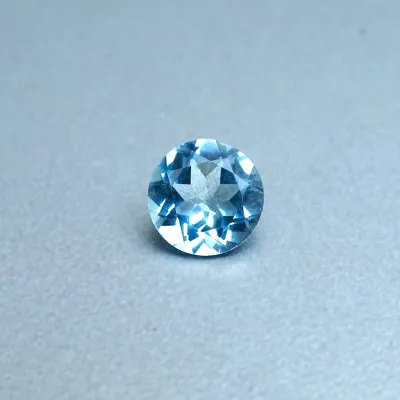
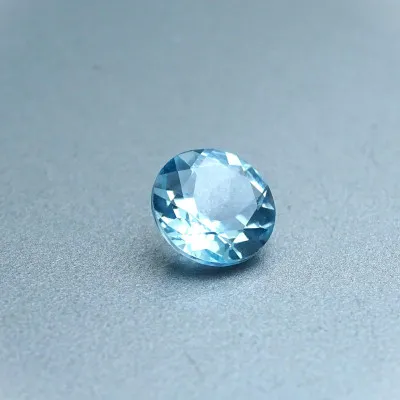
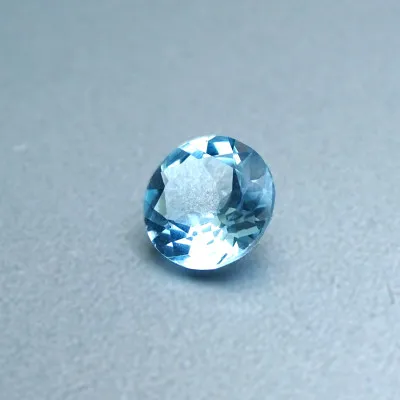
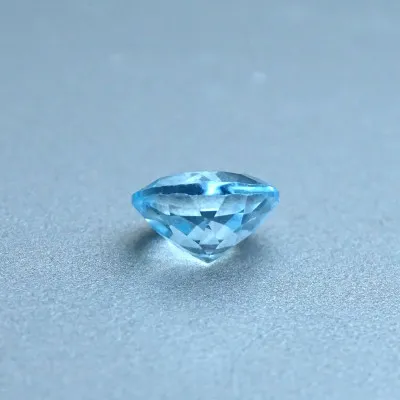
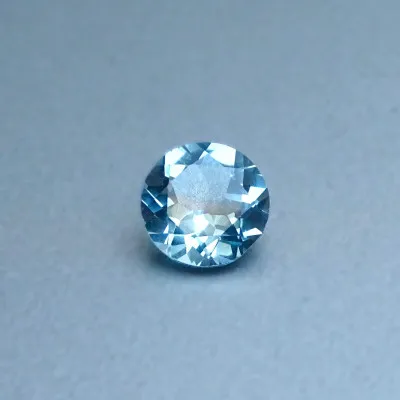
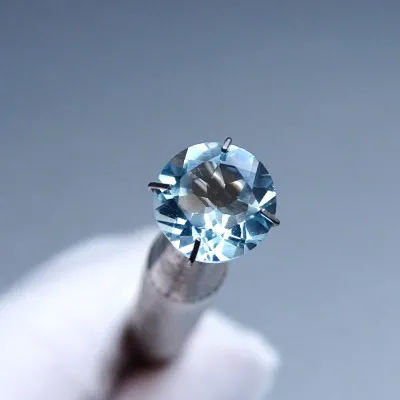
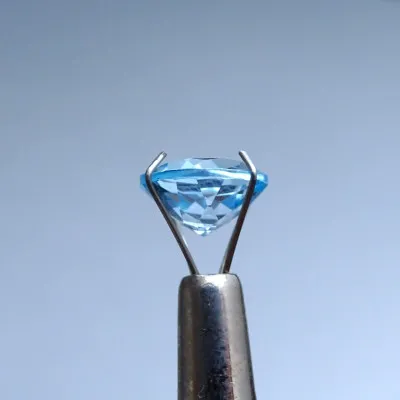
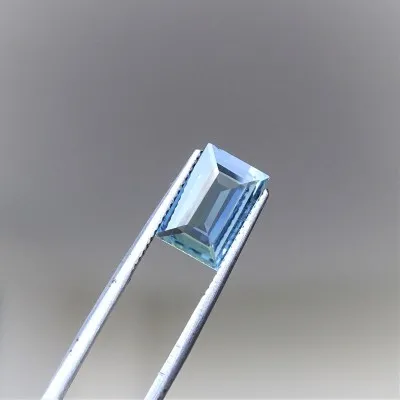
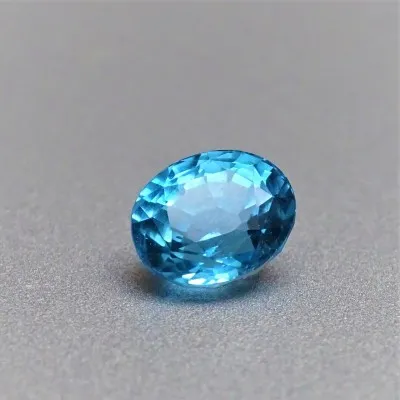
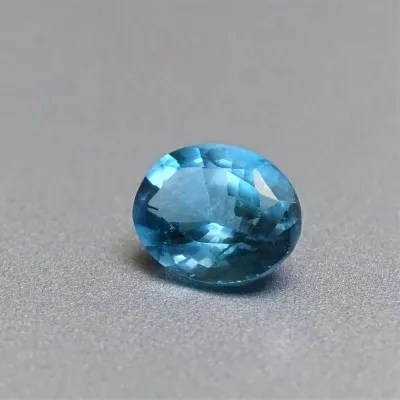
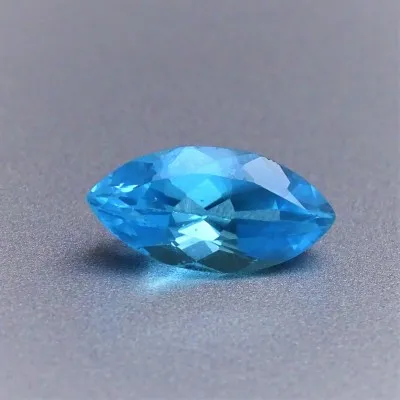
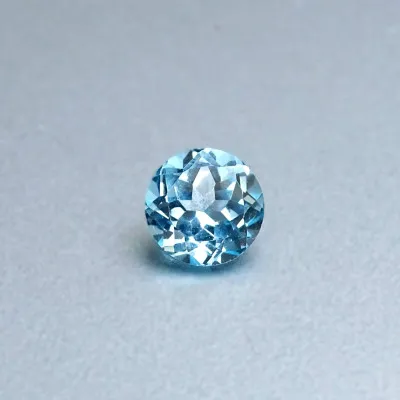
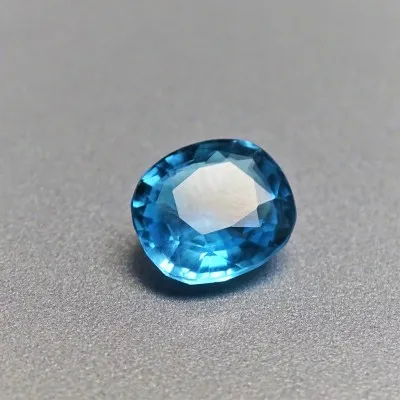
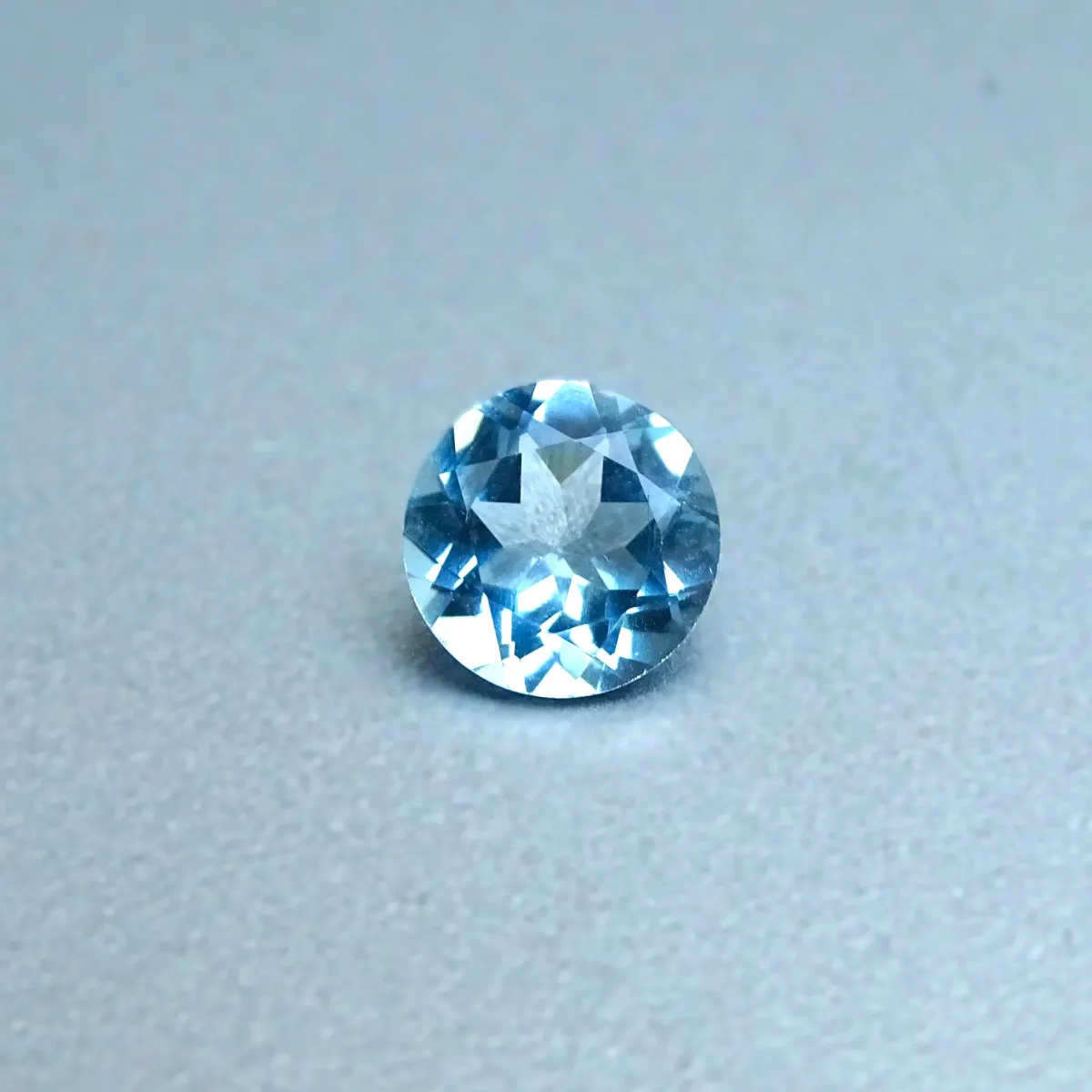
Blue cut topaz from Brazil is a beautiful gemstone that enchants with its pure sky blue color, high transparency and extraordinary brilliance.
Weight: 3.02 ct
Dimensions: 8.9 x 5.2 mm
Color: light blue (heat treated)
Country of origin: Brazil
You always buy the mineral shown in the photo!
Blue Topaz from Brazil is a beautiful gemstone that captivates with its clear sky-blue colour, high transparency and exceptional brilliance. This elegant natural mineral from the silicate group is among the most sought-after jewellery gemstones, valued for its beauty, hardness and remarkable ability to reflect light.
The offered specimen stands out for its delicate light-blue shade and precisely executed round faceted cut. Its regularly arranged facets create a beautiful play of reflections when exposed to light, highlighting the gemstone's transparent appearance.
Its colour evokes a clear summer sky, pure seawater and transparent mountain ice. The delicate blue tone, combined with the sparkling cut, gives the gemstone a fresh, elegant and timeless appearance.
Brazilian Topaz holds an important position in the international gemstone market. Brazil is renowned for its extensive deposits of high-quality Topaz, particularly in the state of Minas Gerais, and supplies material suitable for producing beautiful faceted gemstones.
The greatest attraction of this faceted Topaz is its light-blue colour and beautiful vitreous lustre. As the gemstone is rotated, light reflects from its individual facets, creating bright silvery-blue reflections.
The round faceted cut emphasises the mineral's natural transparency and contributes to its exceptionally attractive appearance. Thanks to the combination of a delicate blue colour and precisely arranged facets, the gemstone appears light, airy and remarkably elegant.
Every natural gemstone possesses its own character, colour shade and individual optical properties. These distinctive characteristics make each faceted stone unique.
High-quality cutting is one of the most important characteristics of gemstones intended for jewellery making. Properly designed and executed facets allow light to enter the gemstone, reflect internally and return towards the observer.
The round faceted cut is among the most popular cutting styles because of its regularity, symmetry and ability to enhance the brilliance of transparent gemstones. Light reflects from individual facets, producing bright reflections that can change in intensity as the gemstone moves.
This effect is particularly attractive in light-blue Topaz, where the combination of transparency, delicate coloration and high-quality polishing creates a radiant, clear and elegant appearance.
A Topaz cut in this manner is suitable both as an individual collector's gemstone and as a material for creating original jewellery, especially rings, pendants and earrings.
Delicate sky-blue colour: A fresh and elegant shade reminiscent of a clear sky.
Round faceted cut: Regular facets create an impressive play of light and brilliant reflections.
Transparency: Its clear appearance beautifully highlights the gemstone's optical properties.
Vitreous lustre: Finely polished surfaces reflect incoming light.
Brazilian origin: Brazil is one of the world's most important producers of natural Topaz.
Topaz is a natural mineral belonging to the nesosilicate group, containing aluminium, silicon, oxygen, fluorine and hydroxyl groups. Its general chemical formula is Al₂SiO₄(F,OH)₂.
It crystallises in the orthorhombic crystal system and naturally forms well-developed columnar crystals that can reach considerable sizes.
One of its most important properties is its hardness of 8 on the Mohs scale. Topaz is therefore significantly harder than minerals such as Quartz, Amethyst or Citrine.
Despite its high hardness, Topaz possesses perfect basal cleavage. Under strong mechanical impact, it may crack or split along particular crystallographic planes. Hardness primarily measures resistance to scratching, not resistance to impact.
Topaz is renowned for its high transparency, vitreous lustre and wide range of colours. This combination of physical properties and aesthetic appeal makes it particularly suitable for gemology and jewellery making.
Topaz belongs to gemstones with a very long history. Even in ancient times, various transparent yellow and golden stones were known by names that later became associated with the mineral now recognised as Topaz.
The origin of the name Topaz is not entirely certain. It is frequently associated with the ancient name of the island Topazios in the Red Sea or with the Sanskrit word tapas, meaning heat or fire.
Historical gemstone names did not always correspond to modern mineralogical classification. Some stones referred to as Topaz in antiquity were probably other minerals, such as Olivine.
Topaz forms particularly in geological environments rich in fluorine and other volatile components. It is typically associated with granitic pegmatites, greisens and certain hydrothermal systems.
As magmatic and hydrothermal fluids cool, minerals containing aluminium, silicon and fluorine may crystallise. Under suitable conditions, well-developed Topaz crystals are formed.
In nature, Topaz is often found in association with other minerals, including Quartz, Feldspars, Micas, Tourmaline, Fluorite and Beryl, depending on the specific geological environment.
Topaz crystals may subsequently be released from their host rocks through weathering. Thanks to their relatively high hardness, they can sometimes survive in secondary alluvial deposits.
Brazil is one of the world's most important producers of natural Topaz. The state of Minas Gerais is particularly famous for deposits containing Topaz of various colours and qualities.
From a mineralogical and gemological perspective, the Ouro Preto region is especially significant. It is renowned for its rare naturally yellow, orange and pinkish-orange Imperial Topaz.
Other Brazilian localities produce colourless and variously coloured Topaz suitable for high-quality faceted gemstones. Colourless Topaz is also commonly used as the starting material for producing colour-enhanced blue Topaz.
Brazilian Topaz is valued for its transparency, suitability for precise cutting and the wide availability of gemstone-quality material.
Topaz is distinguished by an exceptionally broad range of colour varieties. Although the mineral may be completely colourless, natural impurities, colour centres and other factors can produce different shades.
Sky Blue Topaz: A light, delicate blue shade reminiscent of a clear sky. Particularly popular in modern jewellery design.
Swiss Blue Topaz: A brighter, more intense blue shade with attractive brilliance.
London Blue Topaz: A deeper, darker blue colour with characteristic greyish-blue to slightly greenish-blue undertones.
Imperial Topaz: Highly valued gem-quality Topaz, generally displaying orange, golden, pinkish-orange to reddish shades. Important deposits are found in Brazil.
Pink Topaz: Delicate pink to more intense pink shades. Naturally pink specimens are rare, although colour-treated stones are also available on the market.
Golden Topaz: Yellow to golden shades with an attractive warm appearance.
White Topaz: A transparent, colourless gemstone with vitreous lustre. Suitable for faceted cutting and also used as a starting material for producing blue Topaz.
Mystic Topaz: A trade name for Topaz with a special surface coating that produces intense rainbow-like metallic reflections. It is not a separate natural mineral species.
Blue Topaz is a highly popular gemstone. However, from a gemological perspective, it is important to distinguish between the natural mineral origin of the gemstone and the origin of its blue colour.
Naturally blue Topaz occurs in nature, although stronger blue coloration is relatively uncommon. A large proportion of blue Topaz available on today's market acquires its desired colour through controlled irradiation followed by heat treatment.
These treatments modify colour centres within the natural mineral. The gemstone remains Topaz, retaining its fundamental chemical composition and crystal structure. Therefore, colour-treated Topaz is not automatically a synthetic or imitation gemstone.
Sky Blue, Swiss Blue and London Blue are trade names describing different shades of blue, not separate mineral species.
The natural mineral origin of blue Topaz may be confirmed without automatically establishing that its present blue colour also developed naturally.
Unless specific gemological verification of the gemstone's treatment history is available, it is not possible to reliably determine from photographs or visual appearance alone whether a particular stone has undergone colour treatment.
Brazil: One of the world's most important sources of Topaz. The Minas Gerais region is renowned for high-quality gem crystals and rare Imperial Topaz.
Pakistan: An important source of beautiful Topaz crystals, including attractive pink and other coloured specimens.
Russia: Historical deposits in the Ural Mountains and other regions are known for high-quality Topaz crystals and interesting mineralogical discoveries.
Nigeria: A significant producer of gem-quality Topaz in various colours, often suitable for faceted cutting.
United States: Topaz is known from localities in Utah and Colorado. Some deposits also produce attractive natural crystals for mineralogical collections.
Other worldwide localities: Topaz also occurs in Sri Lanka, Madagascar, Namibia and other regions with suitable geological conditions.
Topaz is among the traditional gemstones admired since ancient times. In historical cultures, transparent and attractively coloured gemstones were associated with wealth, light, solar energy and social status.
In European traditions, Topaz was sometimes considered a symbol of strength, courage, friendship and wisdom. Its brilliance and colour contributed to beliefs about the exceptional properties of gemstones.
In modern symbolism, Blue Topaz is primarily associated with calmness, mental clarity, communication, harmony and trust. Its delicate colour evokes an open sky and crystal-clear water.
In traditional and modern spiritual symbolism, Blue Topaz is associated with inner peace, open communication, concentration and personal harmony.
Its gentle blue colour is regarded as a symbol of trust, balance, sincerity and emotional equilibrium. Within these traditions, Blue Topaz is also associated with the throat chakra and the expression of personal thoughts.
These meanings represent cultural and spiritual interpretations. They are not scientifically proven healing or health benefits of the mineral.
Thanks to its high hardness, attractive coloration and distinctive lustre, Topaz is among the most popular gemstones used in rings, earrings, pendants, necklaces and other luxurious jewellery pieces.
Blue Topaz looks particularly beautiful when set in silver, white gold and platinum, whose cool metallic shades complement its sky-blue colour. A striking contrast can also be achieved with yellow gold settings.
The round faceted cut is popular for its symmetry and ability to enhance the gemstone's brilliance. Smaller and medium-sized faceted Topaz gemstones are frequently used as centre stones in elegant rings or earrings.
When setting Topaz in jewellery, its perfect cleavage must be taken into consideration. Despite its hardness of 8, impacts or inappropriate pressure during setting may damage the gemstone.
| Mineral | Topaz |
|---|---|
| Chemical formula | Al₂SiO₄(F,OH)₂ |
| Mineral class | Silicates – Nesosilicates |
| Crystal system | Orthorhombic |
| Hardness | 8 on the Mohs scale |
| Density | Approximately 3.4–3.6 g/cm³ |
| Refractive index | Approximately 1.61–1.64 |
| Lustre | Vitreous |
| Transparency | Transparent to translucent |
| Colours | Colourless, blue, yellow, orange, pink, reddish, brown and others |
| Cleavage | Perfect basal cleavage |
| Crystal habit | Columnar to prismatic crystals |
| Geological formation | Pegmatites, greisens and hydrothermal environments |
| Typical associated minerals | Quartz, Feldspars, Micas, Tourmaline, Fluorite, Beryl |
| Important localities | Brazil, Pakistan, Russia, Nigeria, USA, Sri Lanka |
| Origin of the offered specimen | Brazil |
| Colour of the offered specimen | Light blue – sky-blue shade |
| Cut of the offered specimen | Round faceted cut |
| Uses | Faceted gemstones, jewellery making, gemological collections |
When evaluating faceted Topaz, the most important considerations include colour, transparency, clarity, cut quality, proportions, polishing and the gemstone's overall appearance.
A high-quality faceted cut can enhance brilliance and create a harmonious play of light. In light-blue Topaz, particularly desirable features include pleasant, even coloration, high transparency and aesthetically balanced proportions.
The value of an individual faceted gemstone depends on its size, clarity, colour, cut quality, possible treatments and current market demand. Its natural mineral origin and individual characteristics are important considerations in gemological and collector evaluations.
Topaz has a hardness of 8 on the Mohs scale but still requires careful handling. Its perfect cleavage means that strong impacts or inappropriate mechanical pressure may cause cracks or chips.
We recommend protecting the gemstone from accidental drops, strong impacts, aggressive chemicals and sudden temperature changes. Ultrasonic and steam cleaning are particularly unsuitable.
For regular maintenance, a soft cloth or gentle cleaning with lukewarm water and a mild cleaning solution is sufficient. The gemstone should be carefully dried after cleaning.
We recommend storing faceted Topaz separately in a soft pouch or an individual compartment to prevent contact with other gemstones and hard objects.
The blue colour of Topaz may occur naturally. However, most commercially available blue Topaz gemstones undergo colour enhancement. A common method involves irradiating natural Topaz followed by heat treatment.
If a professional gemological report confirming an untreated natural colour is not available, this characteristic cannot be guaranteed for an individual gemstone. Information about possible treatments should be based on documented details relating to the specific specimen.
Blue Topaz is a coloured gemstone variety of the mineral Topaz, which belongs to the nesosilicate group. It is distinguished by its blue colour, vitreous lustre, high transparency and hardness of 8 on the Mohs scale.
Topaz is a natural mineral. However, a large proportion of commercially available Blue Topaz is produced by enhancing the colour of originally colourless natural Topaz. Such a gemstone remains natural Topaz, but its blue colour has been treated.
These are trade names describing different intensities of blue coloration. Sky Blue is light and delicate, Swiss Blue displays a brighter and more saturated blue, while London Blue has a deeper, darker blue to greyish-blue shade.
Important producers include Brazil, Pakistan, Russia, Nigeria and the USA. Brazil is particularly famous for its deposits in Minas Gerais and rare Imperial Topaz.
Topaz has a hardness of 8 on the Mohs scale. It is resistant to scratching but may be sensitive to strong impacts because of its perfect cleavage.
Faceted cutting enhances the gemstone's transparency, lustre and brilliance. Individual facets reflect light and create attractive optical effects that can be particularly impressive in clear blue Topaz.
Yes. Thanks to its high hardness and attractive colour, Topaz is suitable for various types of jewellery. However, its sensitivity to impacts and its perfect cleavage should be considered during setting and everyday wear.
In traditional symbolism, Blue Topaz is associated with calmness, communication, harmony, trust and mental clarity. These are cultural and spiritual interpretations, not scientifically proven healing properties.
We recommend using a soft cloth or lukewarm water with a mild cleaning solution. Ultrasonic cleaning, sudden temperature changes and strong mechanical stress should be avoided.
Brazilian Topaz is known for its high-quality gemstone material and long mining tradition. The offered light-blue faceted Topaz stands out for its elegant round cut, attractive colour and brilliant reflections.
Explore more natural faceted gemstones and collector's stones, or discover the fascinating world of natural minerals, crystals and crystal druses in the collection at MINERALS-STONES®.
MINERALS-STONES® – the exceptional beauty of natural gemstones. 1 piece = 1 original.
The offered faceted Topaz is an individual gemstone with its own colour, cut and optical characteristics. The product photographs show the actual specimen offered for sale. Every gemstone is a unique natural original.
Blue cut topaz from Brazil is a beautiful gemstone that enchants with its pure sky blue color, high transparency and extraordinary brilliance.
Weight: 3.02 ct
Dimensions: 8.9 x 5.2 mm
Color: light blue (heat treated)
Country of origin: Brazil
You always buy the mineral shown in the photo!