Sorry for the inconvenience.
Search again what you are looking for
|
COOKIES SETTINGS |
Accept all cookies Personalise |
| Accept selected cookies |
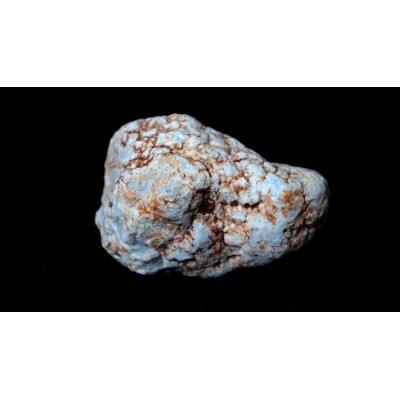
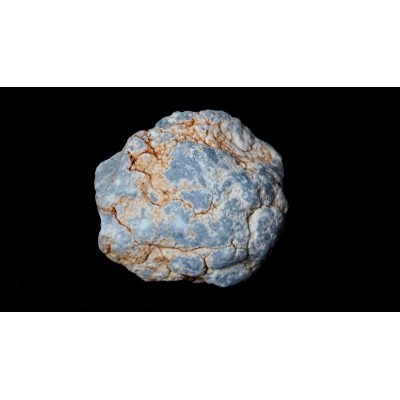
ANGELITE is a trade name for a variety of ANHYDRITE, most often light blue or blue-gray to gray in color. It comes from Peru and is one of the popular semi-precious stones.
Anhydrite (CaSO4 - calcium sulfate), as such, is a rhombic mineral. The name comes from the Greek anhydros - anhydrous, because unlike gypsum, it does not contain water. Its natural occurrence is mostly of sedimentary origin, it belongs to the so-called evaporites (as well as gypsum, halite, sylvite and others). Hydrothermal - forms tailings in ore veins, post-volcanic - from volcanic gases (fumaroles) and magmatic. It forms crystals, fibrous, spherical, fine-grained to solid aggregates, pseudomorphoses. The crystals have the shape of prismatic tables (the surfaces are grooved), twins.
Angelite – a mineral of soft blue color
Angelite is a blue variety of anhydrite, calcium sulfate with the chemical formula CaSO₄. It is characterized by a light blue to bluish color, which gives it a soothing appearance.
Appearance and properties of angelite
Angelite has a hardness of 3.5 on the Mohs scale, a glassy to pearly luster and an opaque appearance. It often occurs in massive formations, less often in well-developed crystals.
Angelite deposits
The most famous angelite deposits are located in Peru, where the highest quality samples come from. Other occurrences are also known from Germany, Poland and Mexico.
History and uses of angelite
The angelite mineral was only described in the 20th century and soon gained popularity due to its unusual color. It is sought after mainly by collectors and is also used as a decorative stone.
Always buy the mineral shown in the photo. Minerals-stones.com – a wide range of minerals, crystals, stones, druses, tektites, jewelry and gemstones from all over the world. Reliable, verified e-shop.
Search again what you are looking for